

0538-5089056
0538-5089056
During the use of thermocouples, sometimes the hot end is oxidized, corroded or the thermocouple material recrystallizes at high temperature, which changes the characteristics of the thermocouple, and then the measurement error becomes larger and larger. In order to ensure a certain accuracy in temperature measurement, Thermocouples must be calibrated periodically to detect changes in the thermocouple. When the change exceeds the specified error range, you can replace the thermocouple wire or cut off a section of the hot end of the original thermocouple, and use it after re-welding. It must also be recalibrated when in use.
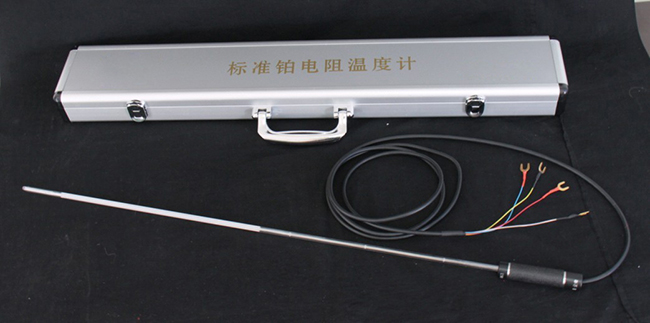
There are usually three methods for thermocouple calibration, namely bipolar method (direct comparison method), unipolar method (same-named pole method) and differential method.
1. Bipolar method
The method of directly comparing the standard and the thermocouple to be calibrated is called the bipolar method.
Advantages: The method is simple and easy to operate. Different types of thermocouples can be calibrated in the same furnace; the measuring ends of the thermocouples are not bundled on the same isothermal surface in the furnace; the number of measurements is small, usually two to four times.
Disadvantages: The free end of the thermocouple is required to be 0 degrees, otherwise it should be corrected; when the model of the standard device is different from that of the thermocouple to be calibrated, due to the large difference in the electric thermal potential at the same temperature, special attention should be paid to the galvanometer during operation. Damage; because the change of furnace temperature directly affects the calibration accuracy, the furnace temperature control is strictly required (for one cycle of reading, for the calibration of industrial thermocouples, the change of furnace temperature should not exceed 1°C).
2. Unipolar method
After binding the standard and the thermocouple to be calibrated (must be of the same type) into the furnace, the calibration method of measuring the differential thermoelectric potential between the standard and the thermocouple with the same name (positive and positive, negative and negative) is called unipolar method,
Advantages: fast reading, and can directly read the difference, easy to calculate, not strict requirements on furnace temperature control during calibration (fluctuations of ±10°C are allowed). temperature (not 0°C) without correction.
Disadvantages: The standard and calibrated thermocouples must be of the same type. For different types of thermocouples, the unipolar method cannot be used. The measuring ends of the standard and calibrated thermocouples must be bound firmly. Improper binding is prone to errors. It is a small potential, so the quality requirements for electrical measuring instruments, transfer switches and connecting wires are very high, otherwise the calibration error will be increased, the wiring is more complicated, and a positive and negative transfer switch is required. When switching from the measurement furnace to the measurement In the case of extreme thermoelectric potential with the same name, due to the sudden change from large potential measurement to small potential measurement, care should be taken not to damage the galvanometer during operation.
3.Differential method
The standard device and the thermocouple to be calibrated (same type) are connected in reverse series into the temperature calibration furnace, and the test method of the thermoelectric potential difference during the direct measurement is called the differential method.
Advantages: fast reading, can directly read the difference, simple calculation, simple wiring, and the reading is half of the unipolar method, the free end of the thermocouple only needs to be kept at room temperature (not limited to 0°C), and no correction is required. During the inspection, the temperature control in the furnace is not strictly required, and it is allowed to fluctuate within ±5°C of the calibration point.
Disadvantages: The standard device and the thermocouple to be calibrated must be of the same type; when measuring the differential potential, the positive pole of the thermocouple to be calibrated must be connected to the positive terminal of the potentiometer; The quality requirements of switches and connecting wires are high; otherwise, the calibration error will be increased. When changing from temperature calibration furnace temperature to measurement of differential potential, due to sudden changes in large potential measurement and small potential measurement, attention should also be paid to the operation The galvanometer is not damaged.
There are several methods for calibrating thermocouples, which should be determined according to the needs in actual application, and special attention should be paid to the regulation of furnace temperature change speed when calibrating thermocouples.
| Previous:Common Problems and Solutions in ThermoCouple Calibration | next:Invitation: Join Us at World Metrology Day 2026 Conference in Singapore |
 Headquarter Address :Tai'an High-tech Development Zone, Shandong Province
Telephon :+86 0538-5089056 +86 13953856217
Fax : +86 0538-5059718
After sale:+86 0538-5050959
Website : www.tadt.com.cn
E-mail : tadtzdh@dearto.cn
Copyright? Tai'an Detu Automation Instrument Co., Ltd. Lu ICP 14024757-1