

0538-5089056
0538-5089056
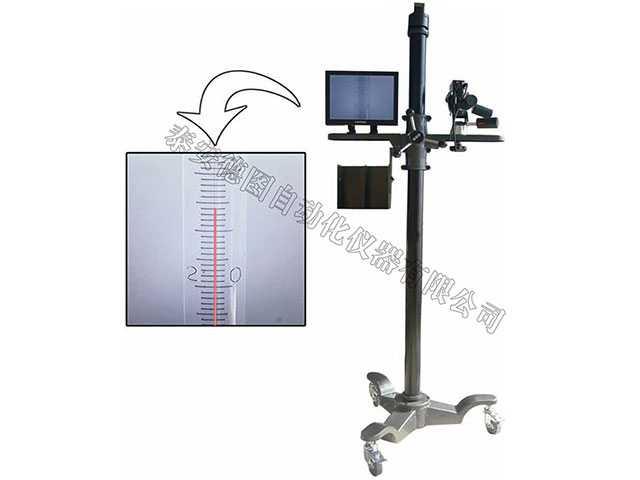
DEARTO equipment, provide you with a complete solution of professional temperature measurement. The following editors from DEARTO share the common thermometers and verification methods of thermal power plants for your reference!
1. Mercury thermometer
Mercury thermometers are simple in structure and low in price. They are mostly used as standard instruments in thermal engineering laboratories. They are generally only used for on-site measurement on site, such as measuring the oil return temperature of each watt of the unit, and the temperature of the lubricant of the auxiliary machine. It is measured using the principle of thermal expansion of the mercury in the capillary and capillary tube. Its sensitivity mainly depends on the thickness of the capillary and the size of the temperature envelope. There are two main sources of error for this thermometer. One is the error caused by the zero drop phenomenon, which can be corrected when the thermometer is verified; the other is that it is caused by the reading of.
2. Bimetal thermometer
Bimetal thermometer is a thermometer made according to the property that the bending of metal with temperature changes is proportional to the temperature. Its temperature-sensing element is made of two metal sheets with different expansion coefficients stacked and welded together. After the bimetallic sheet is heated, it will bend due to the different expansion coefficients of the two metal sheets. The linear expansion length generated by the higher temperature The greater the difference, the greater the angle at which bending occurs.
Such thermometers are usually used as temperature relay controllers, limit value temperature annunciators or temperature compensators. Mainly used in places with large vibration such as temperature linkage circuit and motor body inlet and outlet. With the development of industry, there are now indication bimetal thermometers.
The bimetallic thermometer has a simple structure, low manufacturing cost, and good shock resistance, but the accuracy of this thermometer is not high.
3. Pressure gauge thermometer
The pressure gauge thermometer uses the nature of constant volume gas, liquid thermal expansion and contraction pressure change or saturation vapor saturation pressure change to measure temperature. Its basic structure is a closed system consisting of a temperature-sensing element temperature envelope, a pressure-transmitting element capillary, and a deforming element spring tube.
The temperature envelope directly contacts the measured medium to feel the temperature change. The capillary tube is a seamless round tube made of cold-drawn metal material, which is used to transmit the pressure change. , Generate elastic deformation to drive the pointer to indicate the temperature value. It is mainly used to measure the temperature of the water tank, settling tank, oil tank and other liquids. It is characterized by a simple structure and explosion-proof, not afraid of vibration, but low accuracy and large hysteresis.
Pressure gauge thermometers are divided into indication type, record type, alarm type (live contact) and adjustment type according to the purpose. According to different filling materials, it can be divided into gas pressure thermometer, steam pressure thermometer and liquid pressure thermometer.
The pressure gauge type thermometer with contacts is often used in power plants. It not only has an indicating part, but also has electrical contacts for two-digit adjustment or control. The upper and lower limit contacts of the electrical contact device can be adjusted to any given temperature as required. The upper and lower temperature values are indicated by fixed contacts, and the moving contacts are driven by pointers. When the temperature of the measured medium exceeds (or falls below) the upper limit (or lower limit) given temperature, the moving contact on the thermometer pointer will contact the upper limit (or lower limit) fixed contact, and the signal will be closed (or open) .
4. Thermal resistance thermometer
The thermal resistance thermometer measures the temperature by using the property that the resistance of a conductor or a semiconductor changes with temperature, and is a resistance output type temperature sensing element.
At present, the metal thermal resistance commonly used in the industry is platinum thermal resistance and copper thermal resistance. PT100 platinum thermal resistance and CU50 copper thermal resistance are very commonly used in power plants. PT100 refers to the temperature indication of 0 ° C when the resistance of the platinum resistance is 100 ohms, and CU50 refers to the temperature indication of 0 ° C when the resistance of the copper thermal resistance is 50 ohms.
Metal thermal resistance is divided into two types of armored thermal resistance and ordinary base thermal resistance. Its structure diagram is generally composed of resistance wire, skeleton, lead wire and protective tube. The resistance wire is the part used to sense the temperature and is the core of the thermal resistance; the skeleton is the bracket used to wind, support and fix the resistance wire; the lead wire enables the thermal resistance to be connected to the external measurement and control device. The protective tube is used to protect the thermal resistance and the lead from direct contact with the measured medium from the harmful substances.
In the power plant, PT100 thermal resistance is generally used to measure the temperature of the medium below 850 ℃. When the medium temperature is higher than 150 ℃, most of the armored PT100 thermal resistance is used to prevent the welding point of the resistance wire and the lead wire from being opened due to high temperature. . Use CU50 thermal resistance element to measure the temperature of medium below 100 ℃.
The thermal resistance thermometer has the following characteristics: (1) It has high accuracy. For example, platinum resistance thermometers are used as reference thermometers. (2) High sensitivity, strong output signal, easy to measure and display and realize long distance transmission. (3) The resistance temperature relationship of the metal thermal resistance has good linearity, and the reproducibility and stability are both good. However, due to the large volume, the thermal inertia is large, which is unfavorable for dynamic temperature measurement, and the point temperature cannot be measured.
5. Semiconductor thermistor
The semiconductor thermistor is a solid temperature-sensing element, which is formed by mixing, pressing and sintering oxides of metals such as iron, nickel, manganese, titanium, and copper at a certain ratio. It has a large temperature coefficient of negative resistance. This kind of thermal resistance is mostly used as a temperature compensation resistor in electronic circuits and instrument measurement circuits.
6. Thermocouple
The measuring principle of the thermocouple is to connect two different metal conductors to form a closed loop. When there is a temperature difference between the two ends, a thermoelectric potential is generated in the loop. When the temperature of the reference end is constant, the change of the thermoelectromotive force generated by the electrode and the temperature of the hot end is a single-valued function. The thermoelectromotive force generated by the thermocouple can calculate the temperature of the measured medium.
| Previous:Problems to be noted in the process of verifying thermocouples in thermal experiments | next:Invitation: Join Us at World Metrology Day 2026 Conference in Singapore |
 Headquarter Address :Tai'an High-tech Development Zone, Shandong Province
Telephon :+86 0538-5089056 +86 13953856217
Fax : +86 0538-5059718
After sale:+86 0538-5050959
Website : www.tadt.com.cn
E-mail : tadtzdh@dearto.cn
Copyright? Tai'an Detu Automation Instrument Co., Ltd. Lu ICP 14024757-1